$ cd ..
$ cat projects/nlp-transformer/README.md
Transformer-Based NLP on Energy & Gas News
Applied NLP project using Energy & Gas news articles to explore transformer-based techniques, including sentiment classification, summarization, parameter-efficient fine-tuning, and RAG.
Machine LearningNLPPyTorchLLM Fine-TuningRAG
Overview
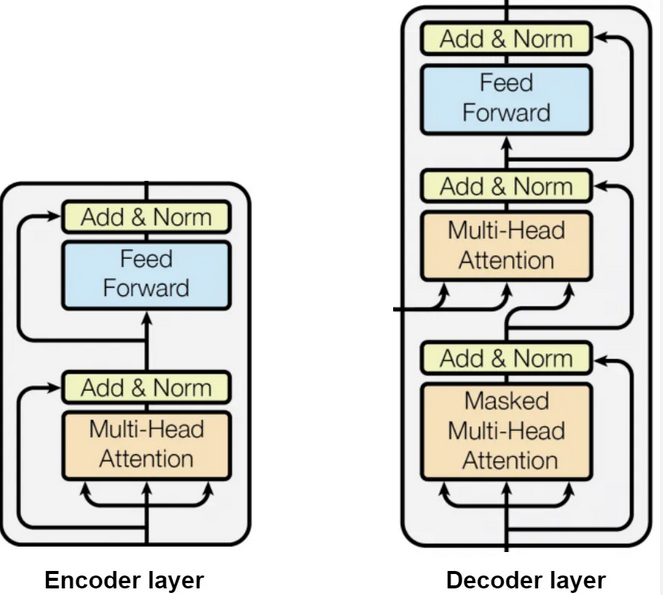
An applied NLP project using Energy & Gas news articles to explore modern transformer-based techniques, including sentiment classification, summarization, parameter-efficient fine-tuning, and Retrieval-Augmented Generation (RAG). The focus was on building and evaluating NLP systems end-to-end while understanding their practical limitations on real, domain-specific text data.
Key Contributions
- Built transformer-based models in PyTorch, including encoder-only and encoder–decoder architectures, to analyze energy and gas news articles
- Applied parameter-efficient fine-tuning (LoRA, adapters, prefix-tuning) to adapt a pretrained language model to domain-specific text
- Implemented a Retrieval-Augmented Generation (RAG) pipeline to ground model responses using retrieved news content
- Designed preprocessing pipelines for noisy, real-world news data using pandas and scikit-learn
- Evaluated model outputs qualitatively and quantitatively, analyzing where fine-tuning and retrieval improved or failed to improve results
Technical Implementation
- Implemented and trained transformer models using PyTorch, focusing on attention mechanisms, sequence modeling, and training stability
- Used Skip-gram embeddings and tokenized text representations for downstream NLP tasks
- Built semantic retrieval using vector similarity to support RAG-based generation
- Compared extractive and abstractive summarization approaches on energy-related news articles
- Analyzed trade-offs between fine-tuning vs. retrieval-based approaches under limited data constraints
Results & Observations
- Transformer-based classifiers captured sequence-level patterns better than embedding-only approaches
- Extractive summarization was more reliable than abstractive summarization given limited training data
- Parameter-efficient fine-tuning enabled domain adaptation with minimal computational cost
- RAG improved transparency and grounding but depended heavily on retrieval quality
$ cat package.json
Tech stack
PythonPyTorchpandasscikit-learnNLPTransformersLLM Fine-TuningRAG